
Critical Care Quiz
Quiz-summary
0 of 8 questions completed
Questions:
- 1
- 2
- 3
- 4
- 5
- 6
- 7
- 8
Information
.
|
You must specify a text. |
|
|
You must specify an email address. |
|
|
You must specify a text. |
You have already completed the quiz before. Hence you can not start it again.
Quiz is loading...
You must sign in or sign up to start the quiz.
You have to finish following quiz, to start this quiz:
Results
0 of 8 questions answered correctly
Your time:
Time has elapsed
You have reached 0 of 0 points, (0)
| Average score |
|
| Your score |
|
Categories
- Not categorized 0%
-
-
You must correctly answer all questions. Please try again.
- 1
- 2
- 3
- 4
- 5
- 6
- 7
- 8
- Answered
- Review
-
Question 1 of 8
1. Question
Which steps are involved in transferring a patient onto the Internal Medicine (IM) Hospitalist service?
Correct
All of these steps need to be done to ensure a successful transfer of a patient out of the ICU. The verbal handoff is necessary to establish continuity of care and ensure the receiving service does not have concerns about the patient being transferred to them. A transfer summary is necessary for the receiving team to have adequate knowledge about a patient’s hospital course. Patients need to be placed on the IM-bed planning list to make sure the Internal Medicine service is aware a patient is coming to their service as the person who accepts the patient may not be the one who receives the patient (occasionally significant time delays exist between placing a transfer order and the patient actually leaving the ICU).
Incorrect
All of these steps need to be done to ensure a successful transfer of a patient out of the ICU. The verbal handoff is necessary to establish continuity of care and ensure the receiving service does not have concerns about the patient being transferred to them. A transfer summary is necessary for the receiving team to have adequate knowledge about a patient’s hospital course. Patients need to be placed on the IM-bed planning list to make sure the Internal Medicine service is aware a patient is coming to their service as the person who accepts the patient may not be the one who receives the patient (occasionally significant time delays exist between placing a transfer order and the patient actually leaving the ICU).
-
Question 2 of 8
2. Question
Which statements about medical errors are correct?
Correct
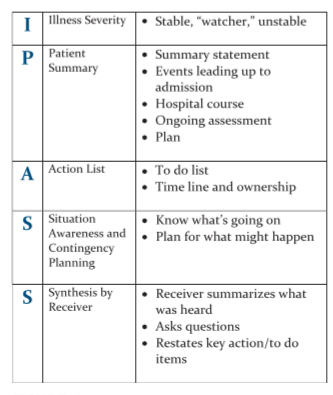 D. Is the correct answer
In reality, almost 2 major medical errors are made in a 24 hours period for every 10 ICU patients. The primary source of errors are communication related and medication safety events. Structured handoffs take the same amount of time as unstructured handoffs and decrease medical errors. IPASS has been shown to decrease medical errors by 23% in pediatric populations. IPASS has been validated in multi-center clinical trials.
Incorrect
D. Is the correct answerIn reality, almost 2 major medical errors are made in a 24 hours period for every 10 ICU patients. The primary source of errors are communication related and medication safety events. Structured handoffs take the same amount of time as unstructured handoffs and decrease medical errors. IPASS has been shown to decrease medical errors by 23% in pediatric populations. IPASS has been validated in multi-center clinical trials.
-
Question 3 of 8
3. Question
Match the type of precautions with the disease process.
Correct
Incorrect
-
Question 4 of 8
4. Question
Copy and pasting notes in the ICU is an allowed practice?
Correct
B. False, notes can have similar structure to those used the day before, but overnight events, the patient’s exam, the vitals, labs and the plan for the day must be updated daily.
Incorrect
B. False, notes can have similar structure to those used the day before, but overnight events, the patient’s exam, the vitals, labs and the plan for the day must be updated daily.
-
Question 5 of 8
5. Question
A generalized consent form for bedside procedures in the ICU exists to help provider workflow. Which statement is correct?
Correct
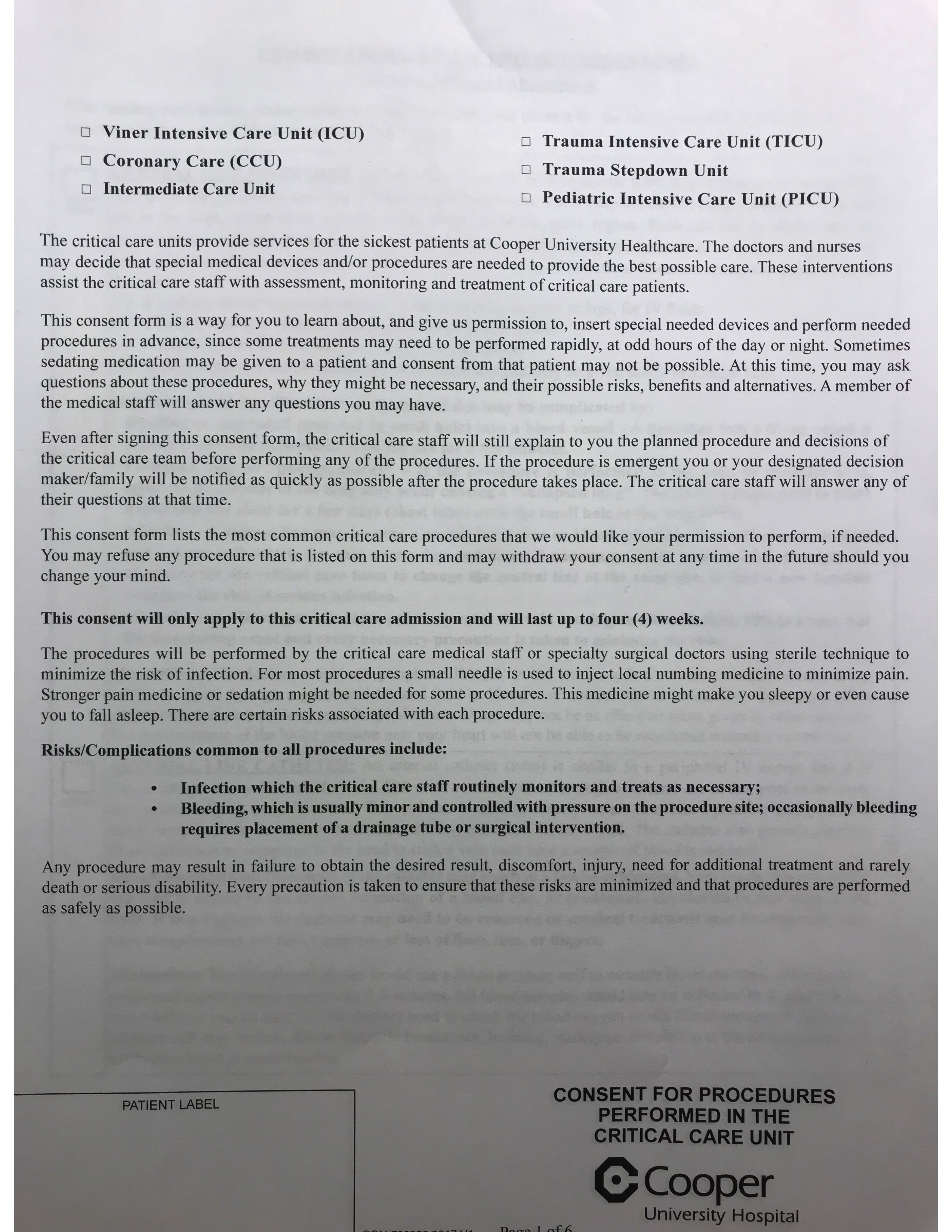
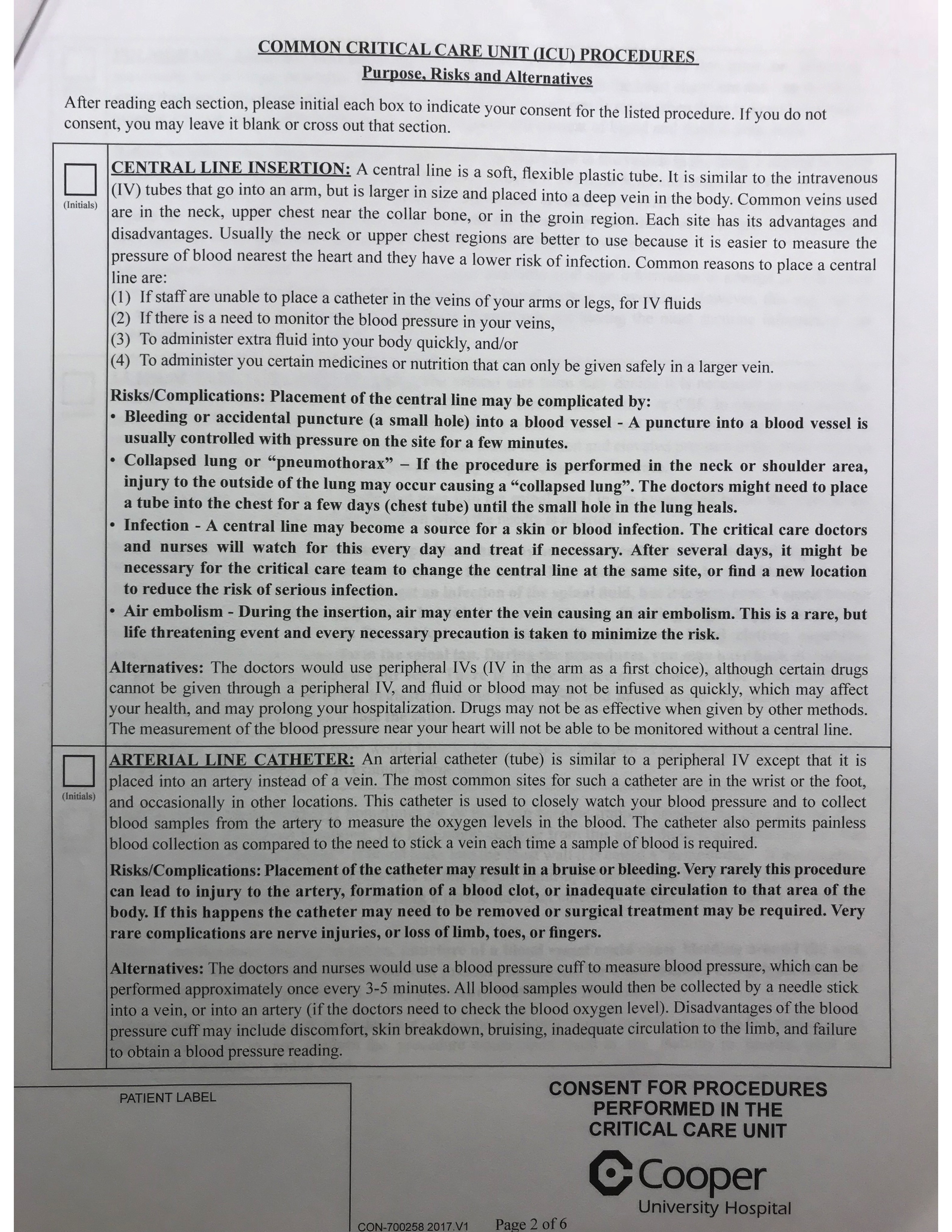
Answer: C The generalized consent form is valid for 4 weeks and packed red blood cells transfusion consent is not part of the form. It is important that the form is completely filled out. All signatures must be legible and the forms dated. If the form is not filled out correctly, consent has not been properly obtained. Furthermore, the witness needs to make sure the patient or their family understands what they are consenting for. This person not only attests that the patient understood the information, or that they were present in the room during the informed consent discussion, but also attests the signature is that of the physician/provider who reviewed the consent material with the patient. A medical interpreter needs to be offered to patient’s that don’t speak English. Families may not understand how to translate medical questions and that can lead to improperly obtained consent. The first two pages of the consent are below.
 Incorrect
Answer: C The generalized consent form is valid for 4 weeks and packed red blood cells transfusion consent is not part of the form. It is important that the form is completely filled out. All signatures must be legible and the forms dated. If the form is not filled out correctly, consent has not been properly obtained. Furthermore, the witness needs to make sure the patient or their family understands what they are consenting for. This person not only attests that the patient understood the information, or that they were present in the room during the informed consent discussion, but also attests the signature is that of the physician/provider who reviewed the consent material with the patient. A medical interpreter needs to be offered to patient’s that don’t speak English. Families may not understand how to translate medical questions and that can lead to improperly obtained consent. The first two pages of the consent are below.
-
Question 6 of 8
6. Question
The electrolyte protocol cannot be used in which patient population?
Correct
A. Patients with renal failure are not allowed to be on the electrolyte protocol. The electrolyte protocol is used by nurses to replace electrolytes in the critically-ill. It is important to know all the critical care protocols that exist and be familiar as how to use them.
Incorrect
A. Patients with renal failure are not allowed to be on the electrolyte protocol. The electrolyte protocol is used by nurses to replace electrolytes in the critically-ill. It is important to know all the critical care protocols that exist and be familiar as how to use them.
-
Question 7 of 8
7. Question
What statement about handwashing is correct?
Correct
Answer E
Poor hand hygiene is the primary cause of the 1.4 Hospital Acquired Infections worldwide. On average anywhere between 38-47% of healthcare providers wash their hands prior to patient contact (below 50%). The top 24 reasons providers don’t wash their hands is below, but often it is because medical staff does not hold eachother accountable and providers forget to wash their hands.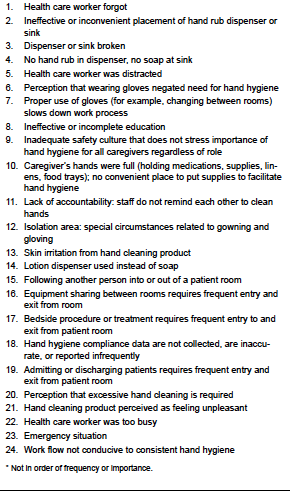
WHO guidelines on hand hygiene in health care (First global patient safety challenge clean care is safer care). WHO, 2009.
Incorrect
Answer E
Poor hand hygiene is the primary cause of the 1.4 Hospital Acquired Infections worldwide. On average anywhere between 38-47% of healthcare providers wash their hands prior to patient contact (below 50%). The top 24 reasons providers don’t wash their hands is below, but often it is because medical staff does not hold eachother accountable and providers forget to wash their hands.WHO guidelines on hand hygiene in health care (First global patient safety challenge clean care is safer care). WHO, 2009.
-
Question 8 of 8
8. Question
Can the form below be used for consent?
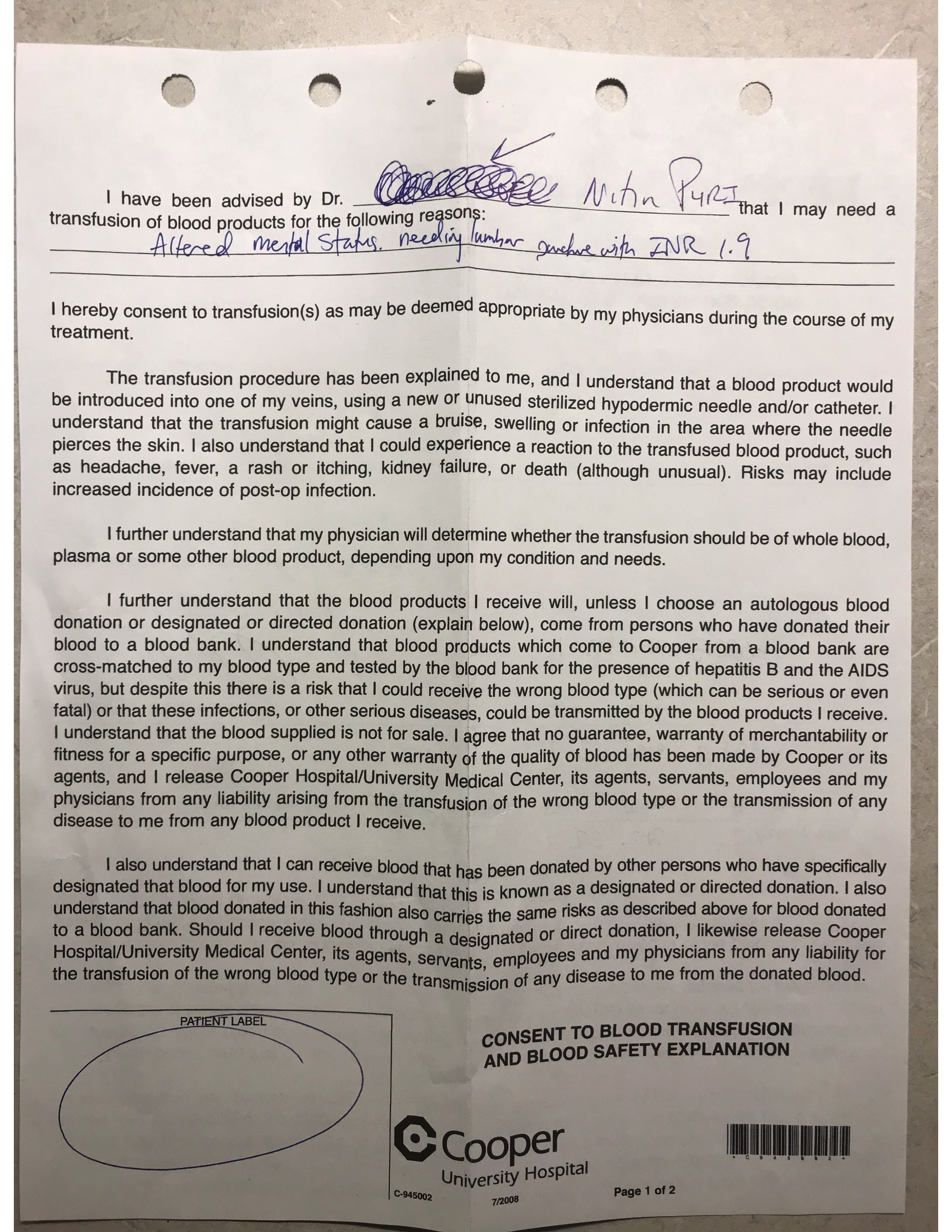
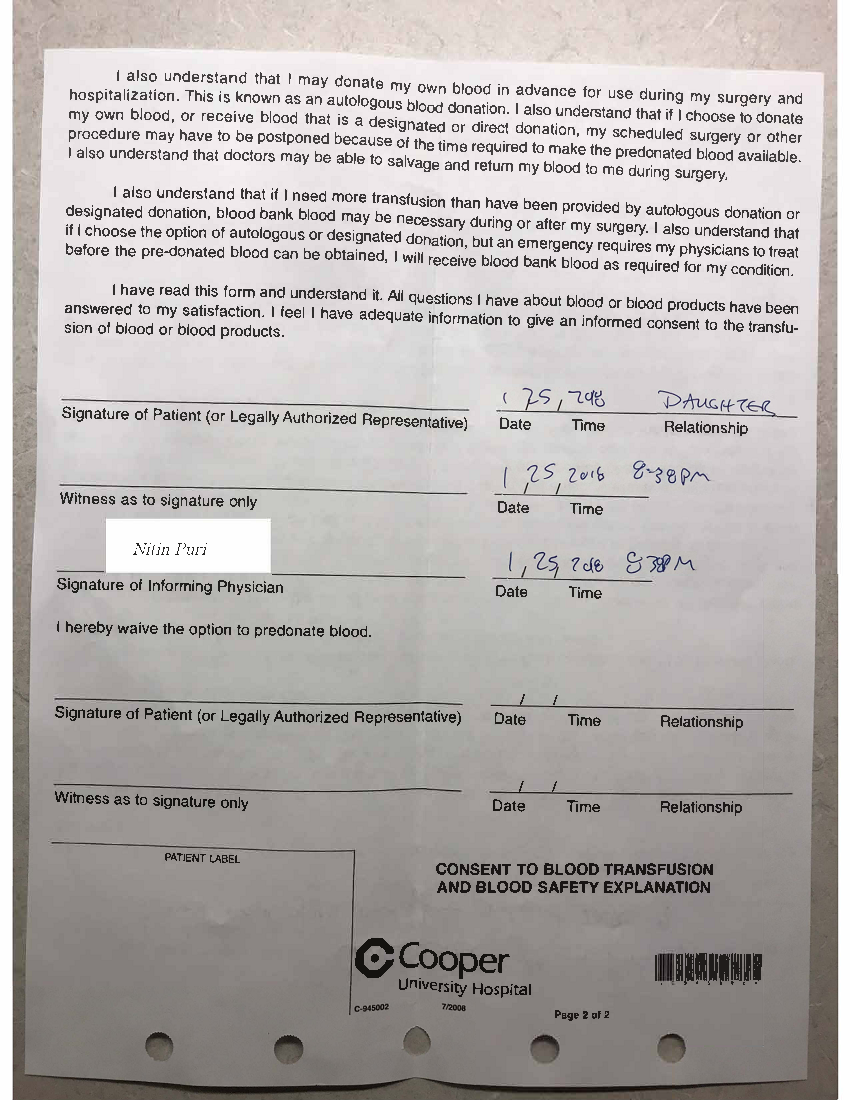 Correct
Answer B: No the forms cannot be used for consent as they are improperly filled out. These are real forms that were used to give blood in the ICU. Please legibly fill out consents and if you have to change something on the forms, please recognize they are legal documents. Please clearly cross out your mistake and initial it. See below all the mistakes in the consent form.
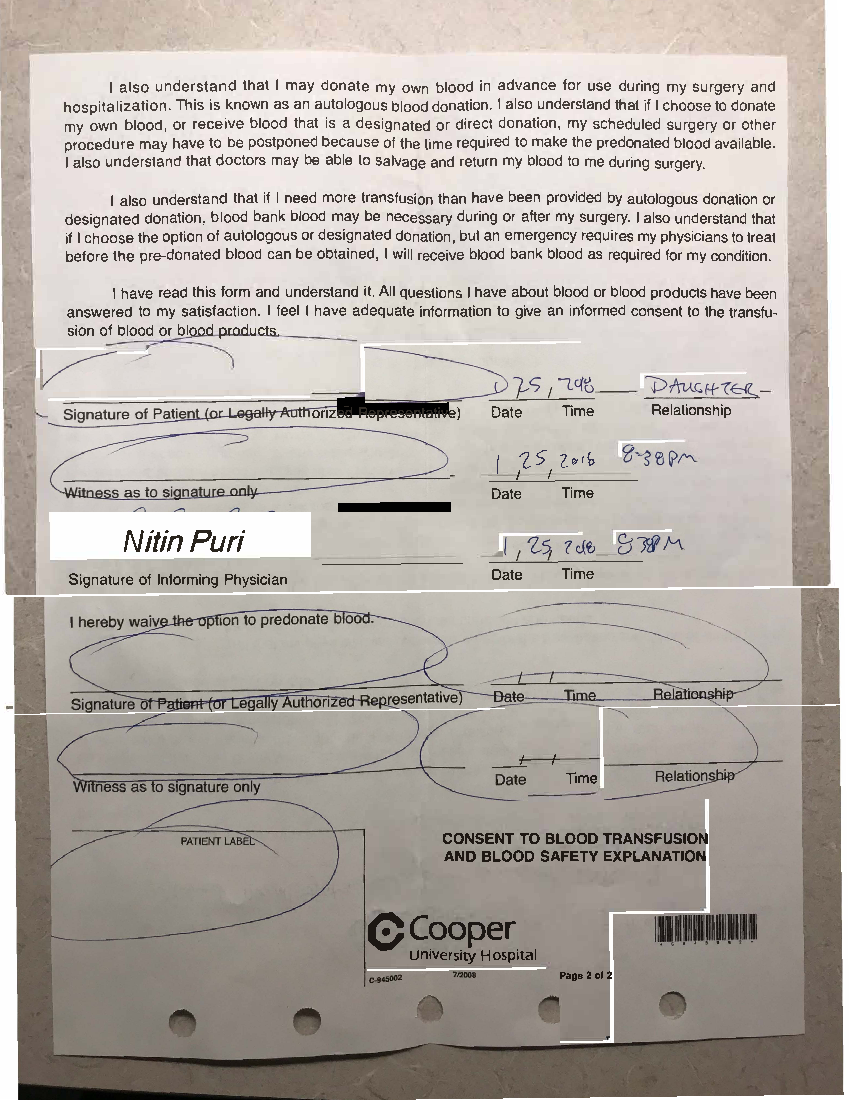 Incorrect
Answer B: No the forms cannot be used for consent as they are improperly filled out. These are real forms that were used to give blood in the ICU. Please legibly fill out consents and if you have to change something on the forms, please recognize they are legal documents. Please clearly cross out your mistake and initial it. See below all the mistakes in the consent form.